Children are different from adults in many ways: they are more emotional and active, they think differently and react faster. These qualities need to be nurtured from an early age, and yoga can help. Yoga for kids supports healthy development, helps children learn to control their body and emotions, and teaches them to pay attention to their breath.
Adult and children’s yoga differ in the poses (asanas, as yoga poses are called), in how long they are held and in intensity. To avoid harming a child, it is important to know which poses suit which age.
What Parents Should Know

Before the first class, explain to your child what they will be doing. Parents can dispel the idea that yogis sit on nails and walk on hot coals: yoga is a gentle kind of sport and play.
To get your child in a positive mood, let them choose a bright mat, comfortable clothes and other accessories for class.

Yoga can be started at any age, from infancy to old age. Toddlers up to about 2.5–3 years old do the poses with a parent’s help. Children aged 3 to 6 or 7 can do simple poses on their own under an instructor’s supervision. As with any activity at this age, yoga should be playful.
By around 10 years old, children can be given more freedom in the exercises, but only under the close supervision of a qualified instructor.
“Adult” poses are best left until about 14, and teenagers should hold poses for shorter times. Advanced poses and holds longer than 30–40 seconds are best left until the late teens or early twenties.
Before you start, keep a few important rules in mind.
- Talk to your child’s doctor first.
- If your child cries, is upset or does not want to do a pose, do not force them. Yoga should be done in a good mood.
- Practice no sooner than two hours after a meal.
- Avoid sudden, jerky movements.
Benefits and Contraindications

Before enrolling a child in yoga, it helps to know what it can offer:
- Regular practice supports general health and well-being.
- It helps develop good posture. For an existing posture problem or scoliosis, work with your child’s doctor, and use yoga only as a gentle addition.
- Children learn what their bodies can do. They begin to feel individual muscles and control them, a skill that very few sports teach.
- It builds flexibility, strength, balance and coordination.
- It teaches healthy breathing habits.
- It has a calming effect and helps to relieve stress. Many children with high energy or attention difficulties find it helpful.
- Moving gently supports the heart and general fitness.

The main difference from many other sports is that there is no competition. In yoga, children learn to respect their bodies and look after their health. That is one reason why injuries are rare, even though the exercise can be quite demanding.
Children also enjoy the calm atmosphere and the chance to do every exercise without pressure, at their own pace.
Many children with developmental differences, such as ADHD, autism, cerebral palsy or Down syndrome, practice yoga as well. Look for an instructor with experience in adaptive yoga and talk to your child’s doctor. A child can join a mixed group or have one-to-one sessions.
Yoga has few contraindications, but there are some. Ask your child’s doctor first if your child has:
- a heart defect;
- cancer;
- a blood disorder;
- an inguinal hernia;
- raised intracranial pressure;
- an infectious illness.
Skip practice for now if your child has:
- a high or low body temperature;
- a flare-up of a chronic condition;
- unusual tiredness;
- just had a massage or acupuncture course;
- eaten a heavy meal shortly before class.
Yoga Poses for Kids

To keep little yogis interested, even a calm activity like yoga should feel like a game. Exercises can be fun and still useful.
- Frog. Start standing with your feet shoulder-width apart. Squat down without lifting your heels off the floor, and place your palms on the floor in the space between your feet, leaning slightly forward. Try hopping and make loud frog sounds.
- Swallow. Start standing with your toes and heels together. Carefully lean forward and lift one leg behind you so that the body looks like the letter “T”. Arms stretched out to the sides help with balance and make the pose look like a swallow in flight.
- Downward-Facing Dog. Start on all fours. Straighten your legs, try to reach the floor with your heels and let the head hang down. Invite children to play dog: pretend to sniff out a trail. Show them the right breathing: smooth, slow inhales and exhales.

In children’s classes, instructors often combine exercises into blocks with a specific aim. Blocks are chosen according to the child’s needs, the parents’ wishes and the instructor’s judgment.
The most popular block for calming the general emotional state:
- Bee. Stand straight with relaxed muscles. Slowly inhale, filling the lungs. As you exhale, buzz like a bee and fold forward as far as you comfortably can, keeping the knees straight. The buzzing helps the child exhale slowly instead of releasing all the air at once.
- Cat. Start on all fours. Arch your back like an angry cat, rounding it as much as you can, and breathe deeply in this position.
- Cloud. Sit cross-legged with a straight back. Take a deep breath in and a slow breath out. Ask the child to imagine that everything good comes in with the inhale and everything bad goes away with the exhale.
- Child’s Pose. On all fours, sit back on your heels. Fold forward until your forehead touches your knees or the floor. Bring your arms back alongside your body and breathe deeply. Practice the exercises in this order: changing the order can unsettle some children.
Better flexibility, good posture and a calm, balanced mood are just some of what children can gain in the first months of practice. Yoga suits quiet, calm children as well as very active ones. The main thing is the right mood and an instructor who teaches simple, useful exercises through play.

Video
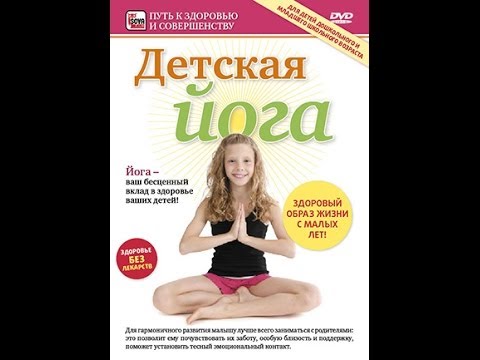
The video comes from an open source on the YouTube channel SovaFilmProduction.