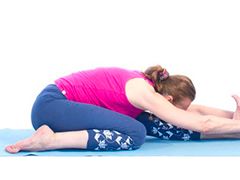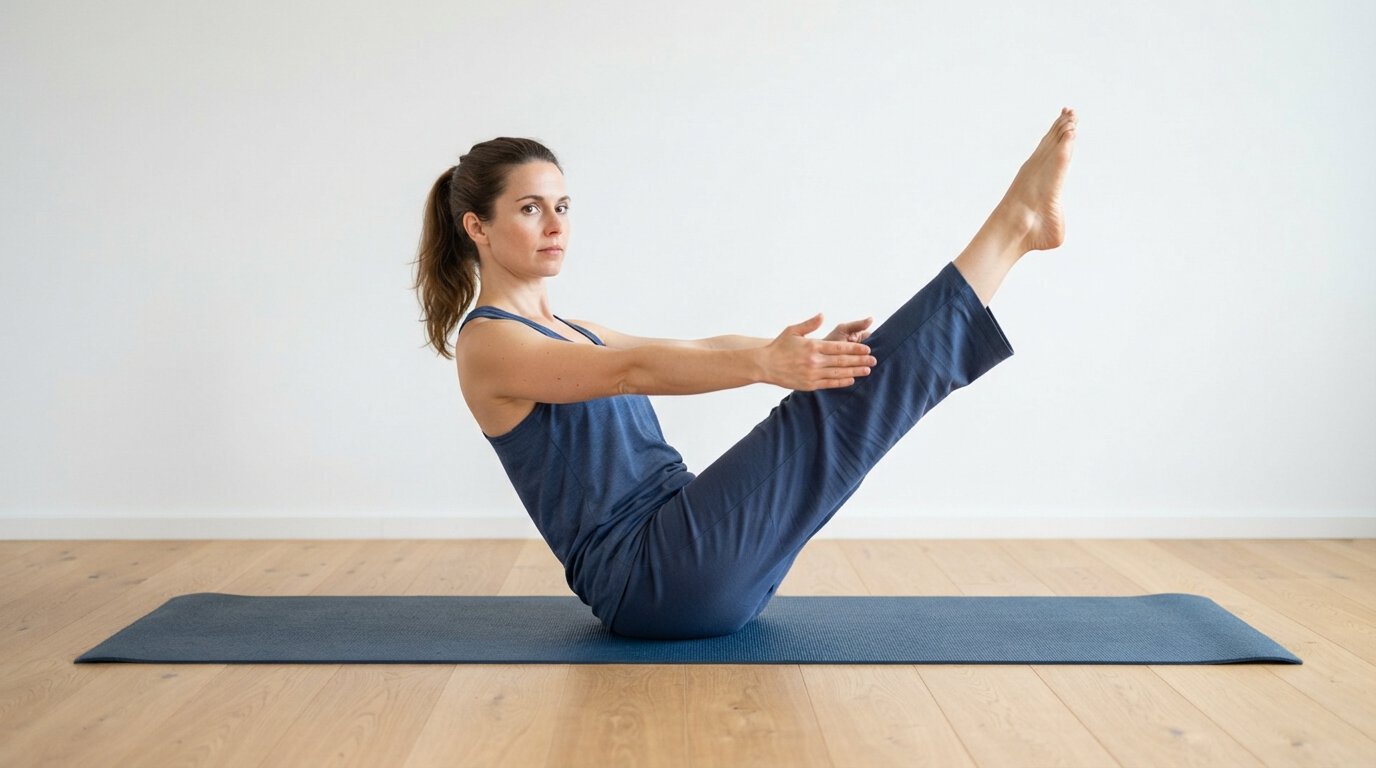
Paripurna Navasana, or Boat Pose, is a seated balance on the sit bones. The body forms a “V” shape, like a boat on the water. Finding your balance in this yoga pose helps to calm the mind and emotions and to align the body, while the abdominal muscles and hip flexors do the real work.
How to Do Boat Pose
Step 1: Start in Staff Pose
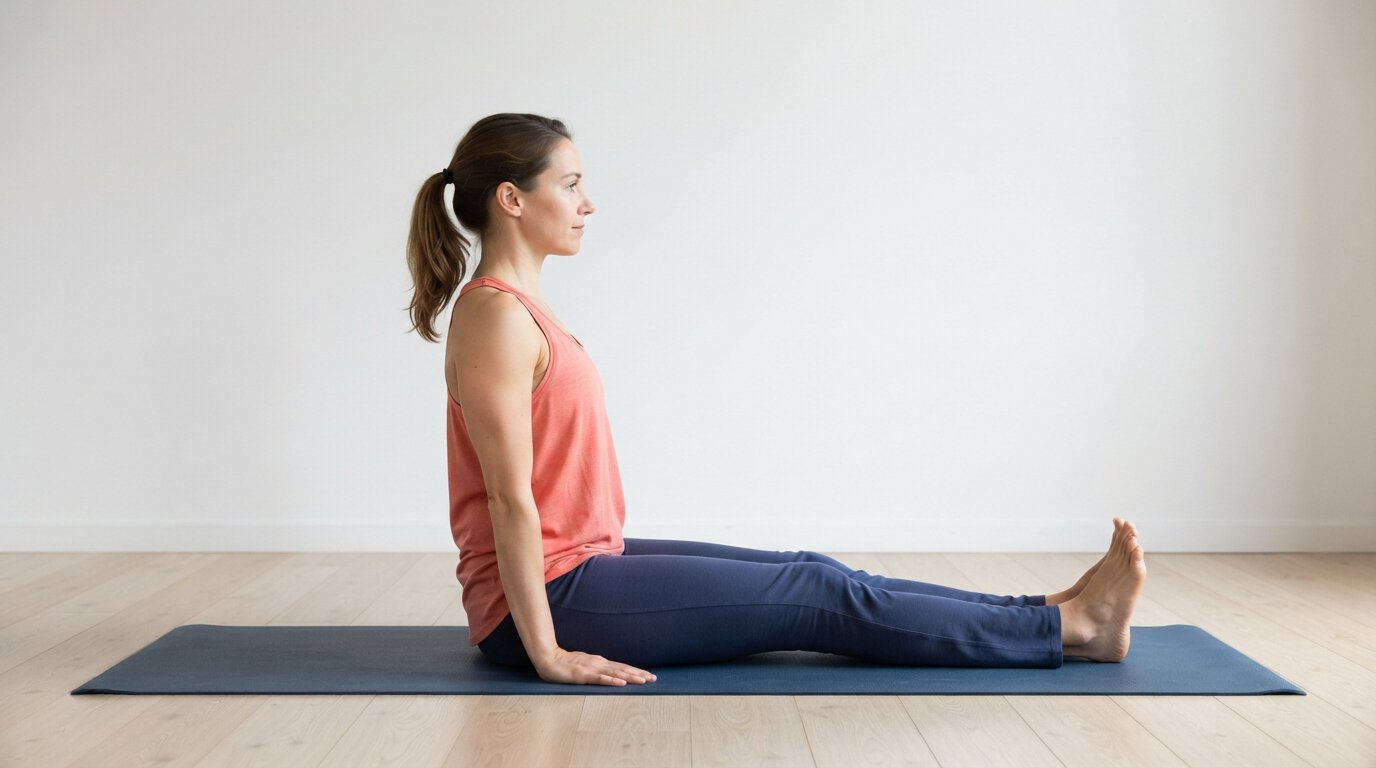
Sit on the floor with your legs stretched straight out in front of you (Dandasana, Staff Pose). Place your palms on the floor a little behind your hips with the fingers pointing toward your feet.
If needed, use your hands to move your buttocks apart and back, so that your sit bones are free. Sit on the area between the sit bones and the tailbone.
Step 2: Lean back and lift the legs
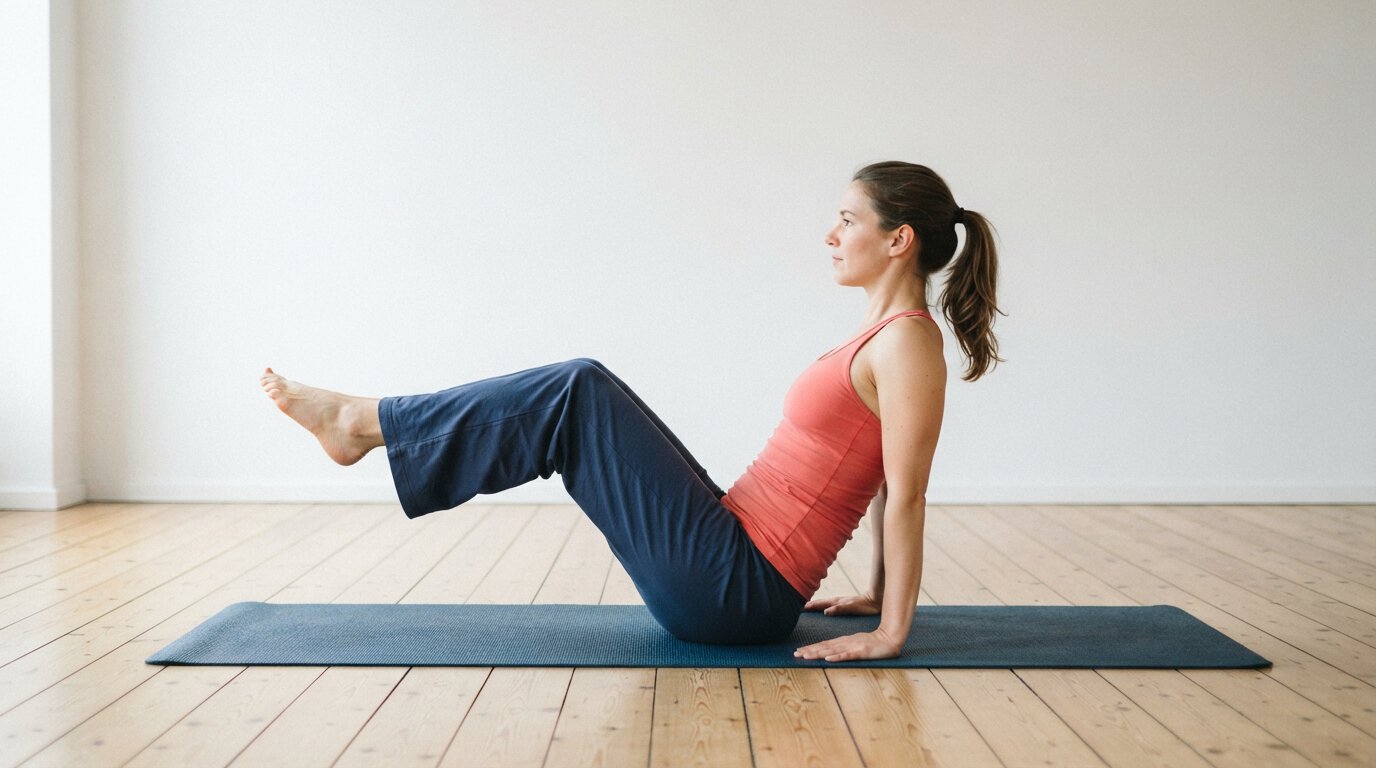
Lift your chest and draw your shoulder blades together.
Exhale and begin to lean your torso back slightly (about 50–60 degrees), lifting both legs off the floor at the same time.
Make sure your back stays straight and does not round. Avoid arching the lower back.
Tuck the tailbone toward the floor and draw the pubic bone toward the navel.
If you can, slowly straighten your knees and lift your toes slightly above eye level. If that is not possible, keep your knees bent.
Step 3: Reach the arms forward
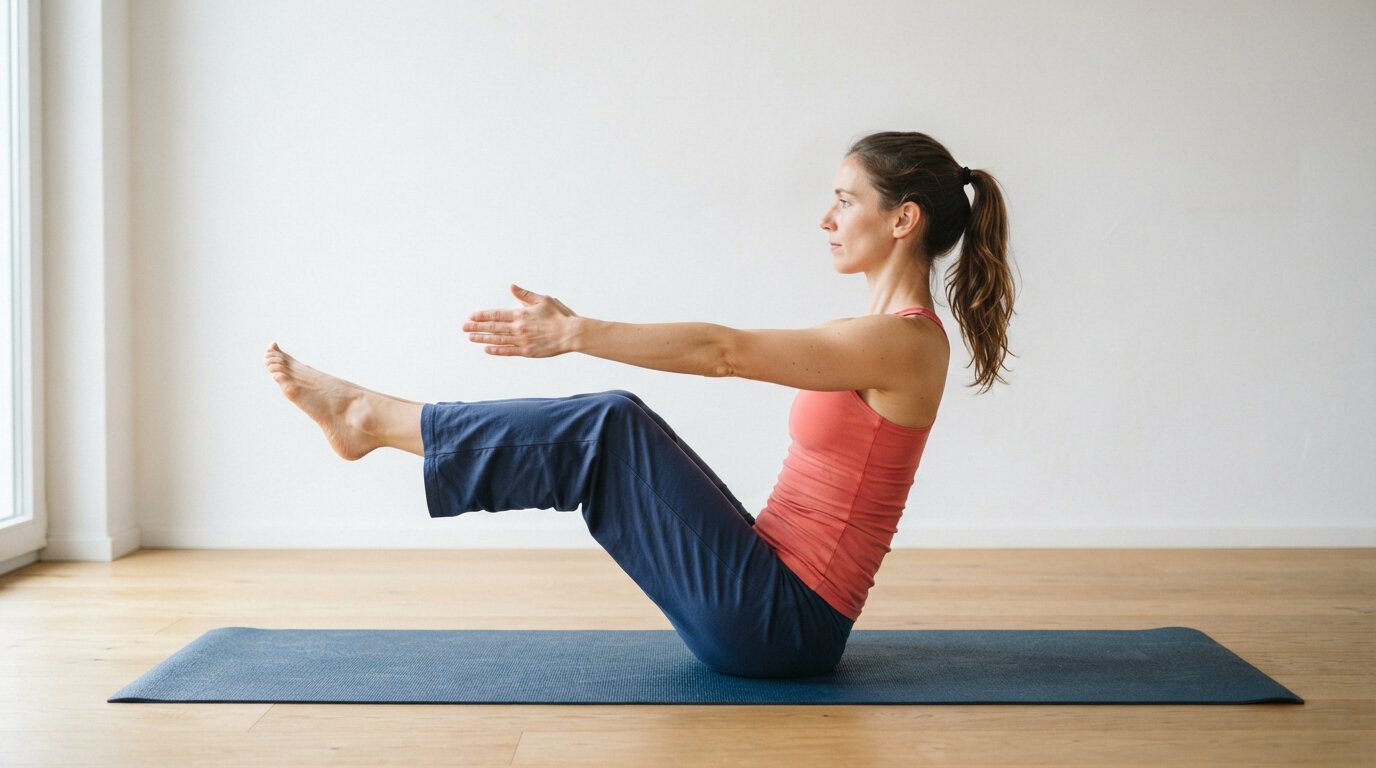
Reach your straight arms forward alongside your legs, parallel to each other and to the floor, with the palms facing in. The shoulders and the palms should be on one line.
Step 4: Find your balance
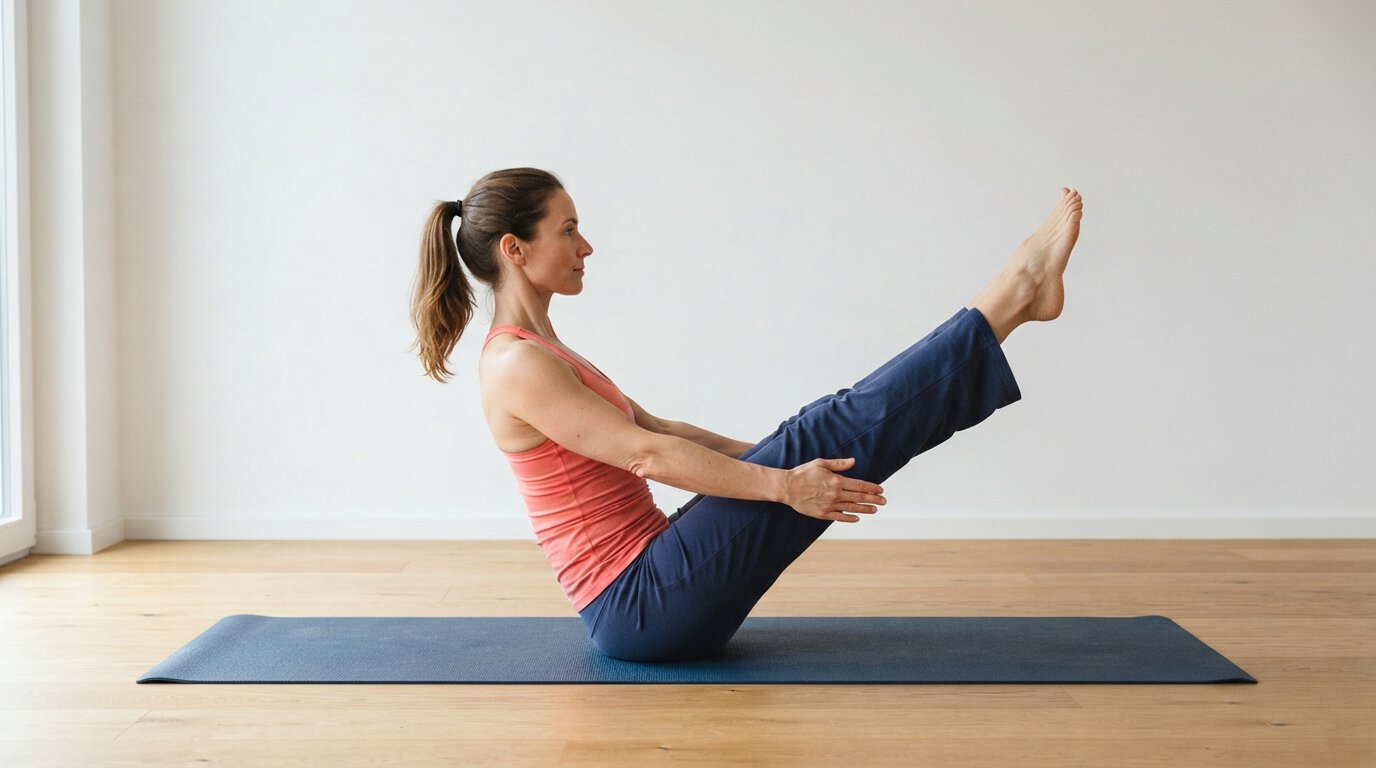
The whole body balances on the sit bones. Keep your back, legs and arms long and engaged.
Keep the lower belly drawn in. Do not let it push forward or bulge.
Press down more firmly through the sit bones to steady the pose and lift the chest higher.
Draw your chin slightly toward your chest and do not tilt your head back.
Step 5: Hold the pose
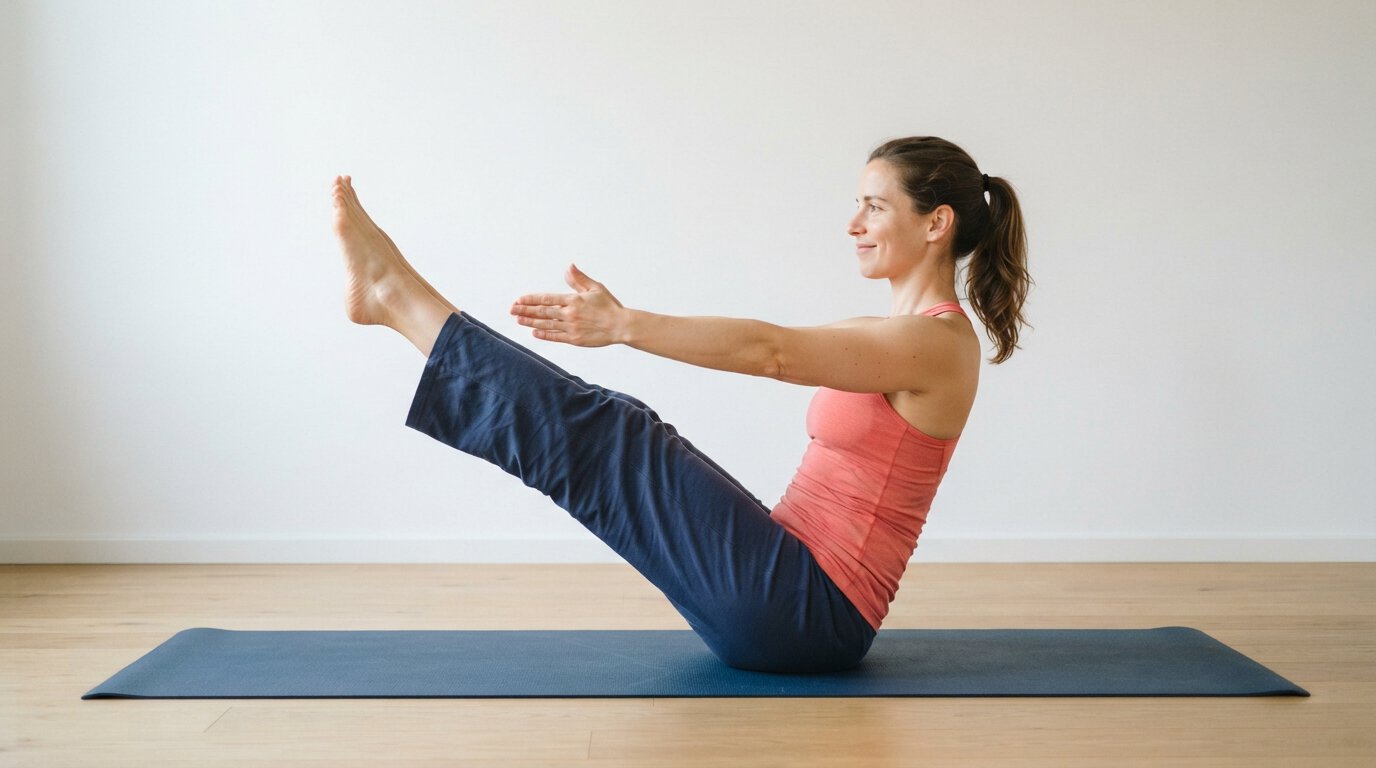
At first, stay in the pose for 10–20 seconds. Gradually increase the time to 1 minute.
Coming Out of the Pose
On an exhale, lower your legs to the floor. Inhale and bring your torso back to an upright position.
Alignment Tips and Common Mistakes
- Keep your arms and legs active: reach strongly through the heels toward the ceiling and through the fingertips forward.
- Do not tense or squeeze the neck. Draw the chin slightly toward the sternum, but do not press it into the throat.
- Do not round the back or the lower back, and do not arch the lower back either.
- Try to lift the arms and the legs at the same time and to lean the torso back as you enter the pose.
Benefits of Boat Pose
- tones and strengthens the abdominal muscles, the hip flexors and the spine;
- stretches the hamstrings;
- helps to relieve stress;
- stimulates the intestines and supports digestion;
- traditionally said to stimulate the kidneys and the thyroid and prostate glands.
Contraindications
- asthma;
- diarrhea;
- acute intestinal conditions;
- heart and cardiovascular conditions;
- insomnia;
- menstruation;
- pregnancy;
- lower back injuries;
- neck injuries: sit with your back against a wall, and when you lean back, rest the back of the head on the wall.
Preparatory Poses
- Adho Mukha Shvanasana (Downward-Facing Dog);
- Uttanasana (Standing Forward Fold).
Advanced Practice
Boat Pose does strengthen the abdominal muscles, but more importantly it strengthens the deep hip flexors. So try to set the heads of the thigh bones deep into the pelvis and to lift the whole torso and the legs from this base.
Variations
-
Easier variation. If it is hard to lift your arms in Step 3, keep your hands on the floor next to your hips, or hold the sides of your thighs while you extend and straighten your legs. You can also reach your arms forward and draw your bent knees toward the belly, then gradually work on straightening the legs.
-
Harder variation: Ardha Navasana (Half Boat Pose). After you come into the pose, clasp your hands behind the head and, on an exhale, lower the legs a little. Round the back slightly so that the weight rests on the sacrum.
Video

The video comes from an open source on the YouTube channel Psy-Yoga Studio.