Sahasrara (Sanskrit sahasrāra, “thousand-petaled”) is the seventh and highest of the seven chakras. It sits at the crown of the head. It goes beyond individual psychology and physiology: Sahasrara is the point of contact between individual and universal consciousness, the place where the sense of “I” dissolves into a feeling of unity with everything that exists.
Unlike the six lower chakras, Sahasrara does not govern a specific function of the body or the psyche. It is the witness of everything that happens in the system: pure, uninvolved awareness (sakshi). Its opening is not the goal of a practice but the result of the maturity of the whole chakra system.
Symbolism of Sahasrara
| Attribute | Meaning |
|---|---|
| Sanskrit | sahasrāra (“thousand-petaled”) |
| Location | Crown of the head (brahmarandhra, “Brahma’s aperture”) |
| Element | Beyond the elements, pure consciousness (Chit) |
| Color | Violet / white (all colors of the rainbow) |
| Yantra | A thousand-petaled lotus facing downward |
| Lotus | 1000 petals (a symbol of infinity) |
| Bija mantra | Silence / OM / AH |
| Deity | Shiva (pure consciousness), Adi Shakti |
| Symbolic animal | None. Sahasrara goes beyond symbolic categories |
| Planet | Uranus / beyond planetary correspondences |
The thousand petals are a metaphor for the infinite potential of consciousness. The lotus faces downward: awakened consciousness “pours” like nectar (amrita) from above through the whole chakra system, bringing it to life.
Physiological Associations
- Endocrine system: the pineal gland, which regulates daily rhythms and produces melatonin.
- Nervous system: the cerebral cortex as a whole, especially the association areas of the parietal and frontal lobes.
- Skull sutures and the fontanelle: brahmarandhra (“Brahma’s aperture”) corresponds to the anterior fontanelle, the opening in a newborn’s skull that closes by about 18 months.
Neuroscience describes states that are traditionally linked with Sahasrara in terms of the default mode network during deep meditation: a fading of the narrative “self” and a sense of dissolving boundaries. Some brain-imaging studies, such as work by Andrew Newberg and colleagues, have found reduced activity in the parietal lobe (which supports our sense of body boundaries) during deep meditative states. This is an area of ongoing research, and these links with the chakra tradition are interpretations, not established facts.
Signs of Imbalance
Overactive Sahasrara:
- Spiritual ego inflation: a conviction of being “chosen” or “enlightened”.
- Dissociation from physical reality and neglect of the body and everyday duties.
- Trouble feeling grounded, a sense of being “not of this world”.
Underactive Sahasrara:
- Materialism as the only value system, a denial of any spiritual dimension.
- A sense that life is meaningless, existential emptiness despite outward success.
- Low mood and an inability to look beyond the “I”.
- Chronic headaches or sensitivity to light.
These are traditional descriptions, not diagnoses. Persistent low mood, headaches or a sense of disconnection are good reasons to talk to a doctor or a mental health professional.
Practices for Sahasrara
An important warning: in most traditions, specific practices for “forcing open” Sahasrara are not recommended. It can only happen on the basis of the maturity of all the lower centers. Working with Sahasrara is first of all deep meditation and letting go of control.
Asanas
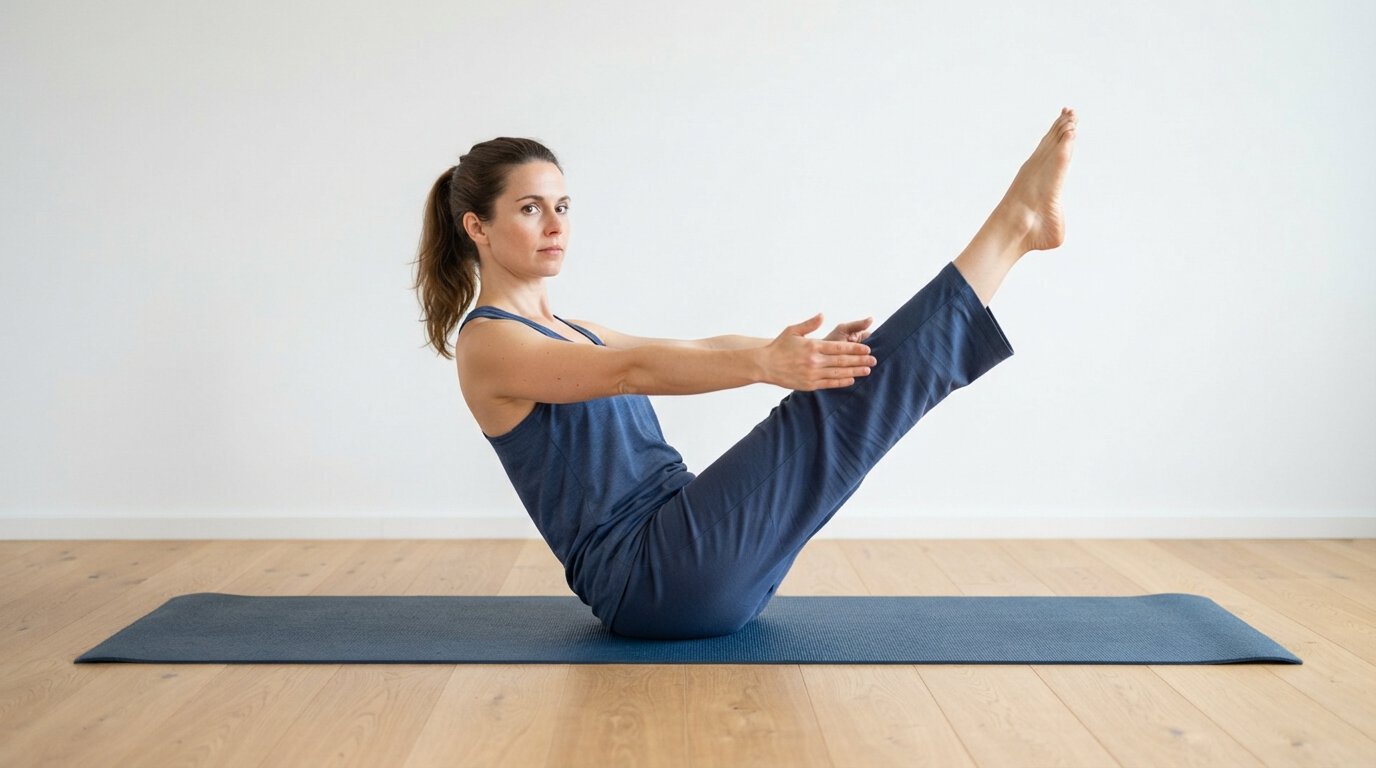
- Salamba Shirshasana (Headstand) works directly with the crown area. It is an advanced pose and should be learned only with a qualified teacher. It is not suitable for people with neck problems or high blood pressure.
- Prasarita Padottanasana (Wide-Legged Forward Fold): the crown of the head reaches toward the floor.
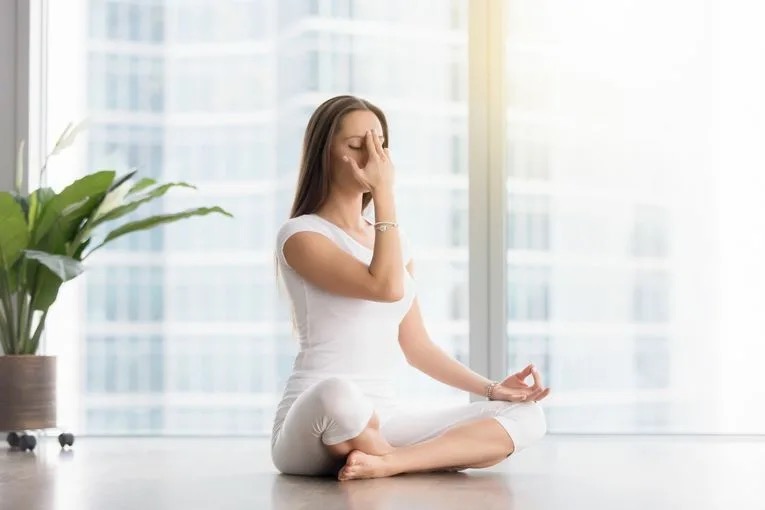
- Padmasana (Lotus Pose) is a classic meditation pose that is said to direct prana upward along the central channel (Sushumna). Sukhasana (Easy Pose) is a good alternative.
- Savasana (Corpse Pose) is a complete dissolving of the “doer”. Some traditions see Savasana as a direct practice of Sahasrara.
Sahasrara Meditation
A practice of “thousand-petaled light”:
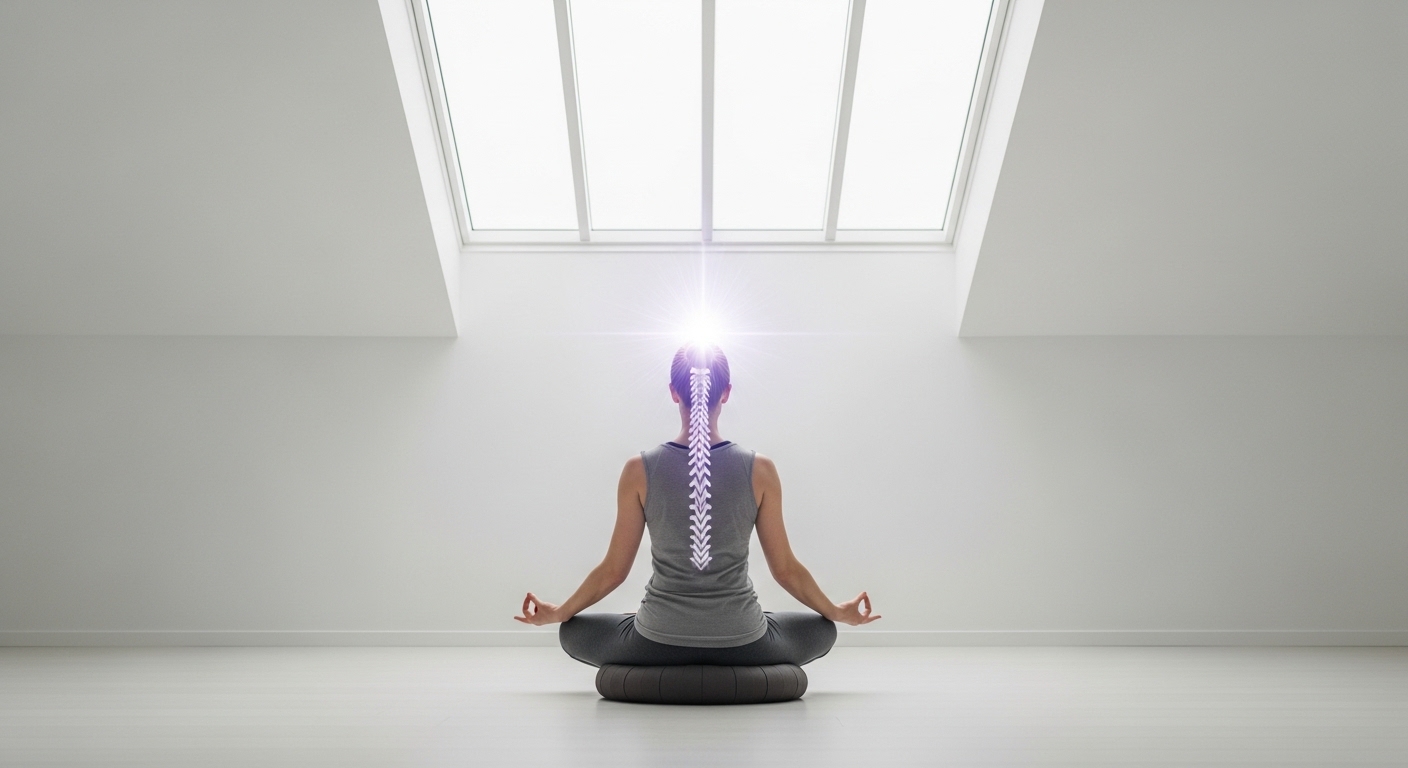
- Sit in Padmasana or Sukhasana, with a straight spine.
- Breathe calmly for a few minutes and let the mind settle.
- Bring your attention to the crown of the head. Imagine a lotus with a thousand petals, white or violet, opening there.
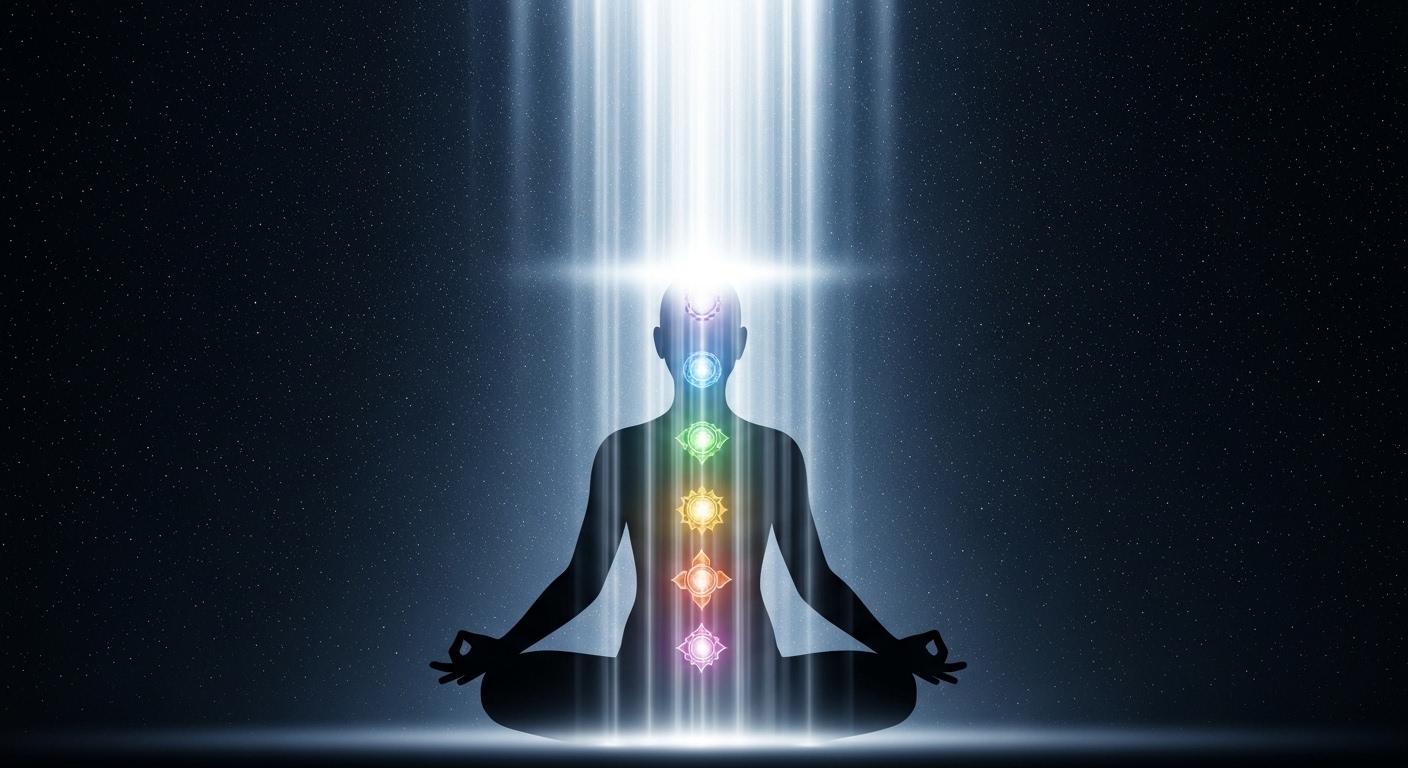
- Visualize a stream of white light descending through the open lotus. It fills the whole spine from top to bottom, passing through every chakra.
- Let go of any visualization. Simply stay in a state of open, unfocused awareness.
- If a thought appears, observe it as a witness without getting involved.
- Duration: 20–40 minutes. Beginners can start with 5–10 minutes.
The Practice of Silence (Mauna)
Mauna is conscious silence for several hours or days. In the tradition of Ramana Maharshi it was the main method: the question “Who am I?” traces the source of the sense of “I” until it dissolves in pure awareness. Mauna reduces the activity of the narrative self and creates space for experiencing Sahasrara.
Pranayama: Nadi Shodhana With Kumbhaka
This is an advanced technique: holding the breath after the inhale (antara kumbhaka) with attention on Sahasrara. Prana accumulated during the hold is said to rise naturally along Sushumna. For experienced practitioners only. Without proper preparation, long breath retentions are contraindicated. Start with plain Nadi Shodhana, without any breath holds.
Sahasrara in the Tantric Tradition
In Kundalini yoga Sahasrara is the end point of the rise of Kundalini Shakti, the serpent energy that awakens at Muladhara and rises through all the chakras. The meeting of Kundalini (Shakti) with Shiva in Sahasrara is described as the experience of samadhi: the dissolving of individual consciousness in the universal.
It is important to understand that in most traditions this is not an event you can “get” through a technique. It is the result of long, consistent practice, of a way of life (yama and niyama) and of the gradual freeing of all the lower chakras. See also our articles on Kundalini meditation and on the types of meditation.
FAQ
Can I “open” Sahasrara with meditation in a few weeks? No. Such promises are marketing, not spiritual teaching. The experiences that the tradition connects with Sahasrara are the result of many years of practice. Trying to force the process can lead to disorientation, spiritual narcissism or psychological instability.
How can I tell a spiritual experience from dissociation? In the classical texts the real opening of Sahasrara is a combination of clarity and love, steadiness and peace, with full presence in the world. Dissociation is withdrawal from reality, blurriness and an inability to function. If a practice makes you less able to love and to act, it is not the opening of Sahasrara.
Why is Sahasrara drawn facing downward? It points to descending grace (prasad): awakened consciousness “pours” into the world as compassion and wisdom. Spiritual realization is not an escape from life but a fuller presence in it.