

Ayurveda nutrition is a whole food system according to the ancient Indian teaching Ayurveda. It is based on meal times, season, and each person’s digestion type.
Features
According to Ayurveda, nutrition by doshas is one of the most important factors affecting a person’s moral and physical health. It is due to the consumption of products containing toxins and slags that the vast majority of health problems arise. The predominance of Pitta, Kapha, or Vata in the human body determines the lifestyle and recommendations for Ayurvedic nutrition, designed to maintain or balance the predominant dosha. Nutrition by doshas:
- Pitta nutrition should contain cool, heavy, and dry food; it should be taken three times a day, avoiding late dinner. You should not consume salty, oily, sour food. Also exclude fried, floury, and fatty foods.
- Kapha should not consume sweet, salty, cold, and spicy food, as people of this type are prone to overweight. The optimal option is hot, light and dry, with plenty of spices. The most dense meal is lunch, breakfast and dinner are light.
- cold Vata is well balanced by hot, oily food, warm drinks. The diet is always at the same time four times a day. Dense meals – breakfast and lunch, light dinner. Rough and cold food, carbonated drinks are contraindicated.
According to Ayurveda, digestive fire Agni is responsible for digestion. It needs to be constantly maintained and strengthened. Only strong Agni contributes to proper assimilation and digestion. A developed meal schedule, the correct combination of products, and the sustained time between meals (4-6 hours) contribute to the strengthening of Agni.
Rules
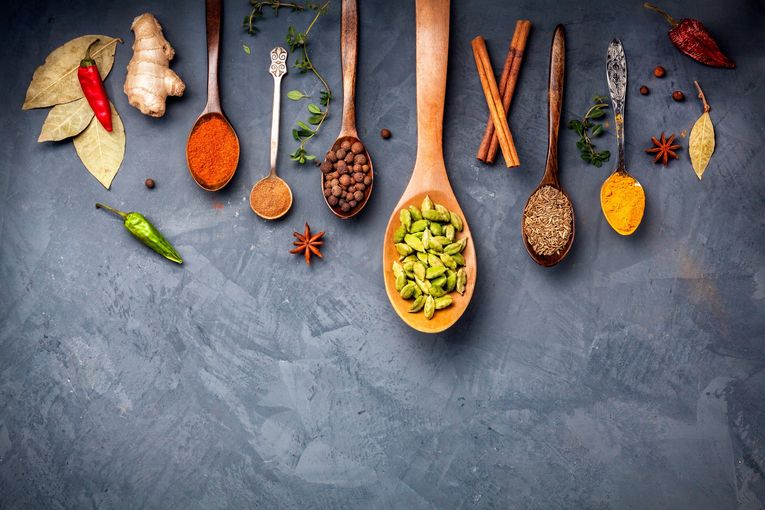
Ayurvedic nutrition is not a diet in the usual sense of the word, but a certain combination of products and a set of established rules with which you can maintain a healthy balance in the physical and moral appearance of a person.
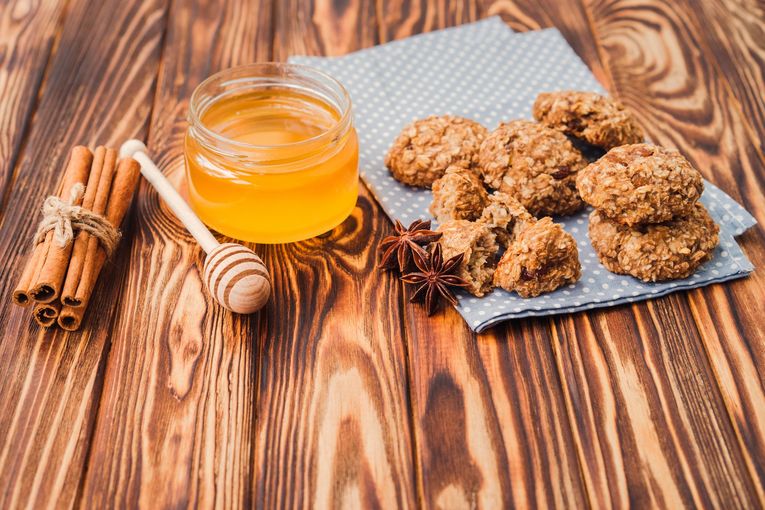
Particular attention should be paid to Ayurveda nutrition for women, which should be based on increasing lunar energy, because the Moon is responsible for female attractiveness, harmonization in personal life, and the correct level of hormones in the female body. To increase lunar energy you need:
- consume warm milk early in the morning or after 6 pm. Milk can be seasoned with honey, sugar or fennel.
- include fruits such as banana (to increase endorphins), plum (contribute to the normalization of heart work, regulate pressure) or pear (awakens leadership qualities) in your diet;
- use honey. A must for every woman, as the most feminine product, personifying love and tenderness.
- consume sweets before 12 pm. Necessary for the normalization and maintenance of hormonal levels.
Combination of products
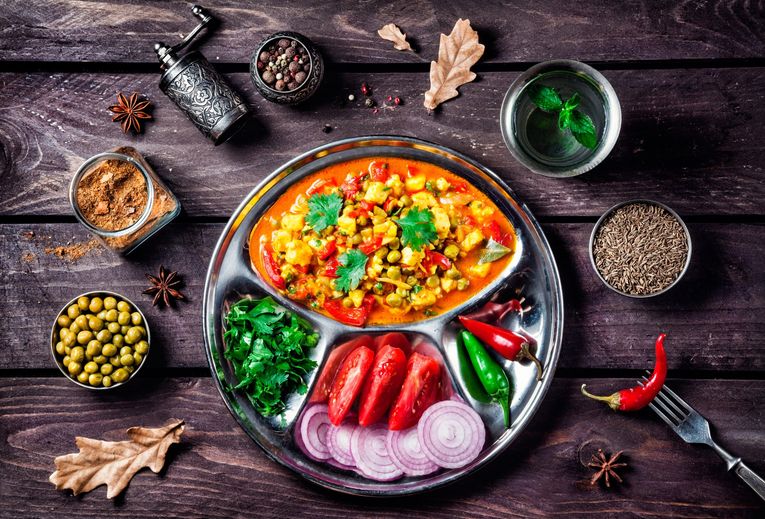
The main role in Ayurvedic cooking is given to the combination of products and their division into: tamas, rajas and sattva:
- tamas includes products that are chemically processed or grown using fertilizers with various additives and fertilizers: canned goods, eggs, meat, fish, alcohol, frozen products, semi-finished products. It is tamas food that should be excluded from the diet.
- rajas products are fried, stewed, spicy food, sweets, tea, coffee, alcohol;
- sattva products are the most natural and fresh. These are vegetables, fruits, nuts, dairy products. Easily digestible, digestible, the most suitable food for those who suffer from excess weight.
When consuming tamas and rajas products in large quantities, anxiety, nervousness, increased excitability, and decreased performance will be observed. Therefore, the diet should consist of 75-80% of sattva-type products.


