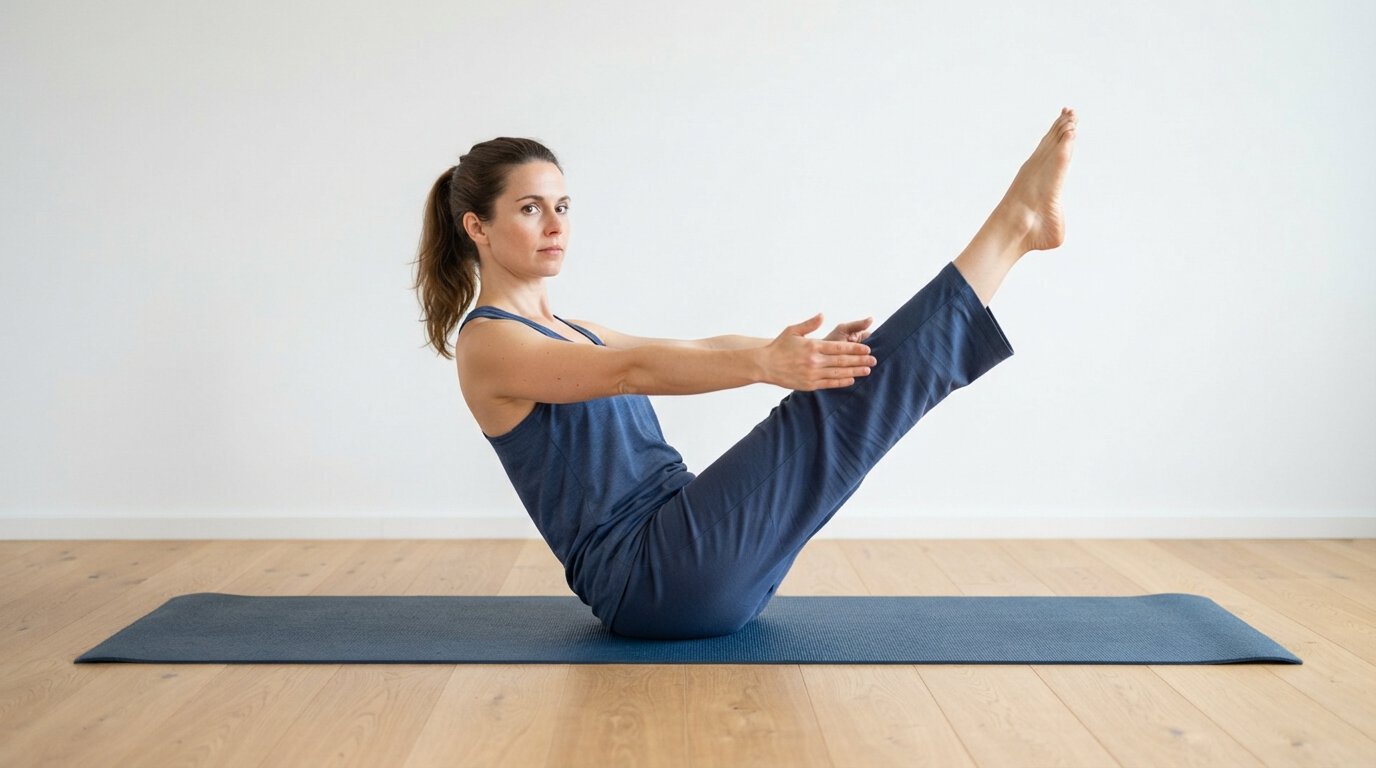
It is customary, and more comfortable, to practice yoga on a special mat, whether you practice at home, in a studio or outdoors. Many beginners wonder how to choose a yoga mat and which features and criteria matter.
A personal mat helps with hygiene and lowers the risk of injury during practice.
Out of the wide choice, pay attention to grip, size, thickness, weight, what comes with the mat and the alignment lines. Natural materials, such as natural rubber, are often preferred. (If you have a latex allergy, avoid natural rubber and choose a different material.)
Grip
Grip is one of the most important features. A mat is there to keep your yoga poses safe, so it must grip the surface well. The side that touches the floor should “stick” to the floor and prevent the mat from sliding. The top surface, where you do the exercises that put particular tension on the hands and feet, should also minimize slipping.
Camping foam pads and gym exercise mats are not suitable for yoga when it comes to grip.
A polyurethane (PU) top layer or a natural rubber surface usually gives the best grip, including for sweaty hands.
A microfiber surface helps to stop the palms from slipping. It is popular for hot or sweaty practice.
A textured, non-slip surface helps to prevent sliding on both sides.
Size

The size of a yoga mat is chosen individually. To find the length:
- for regular poses, add 4–6 inches (10–15 cm) to your height;
- for dynamic practice, choose a length of more than 78 inches (200 cm).
An acceptable width is 24 to 32 inches (60–80 cm). A wider mat gives you more personal space for the exercises, but it is less convenient to carry.
Thickness
Thickness is another important feature, especially for beginners. It usually ranges from 1/8 to 1/4 inch (3–6 mm). A thicker mat is more comfortable for poses that put weight on the elbows and knees. But thicker mats are also heavier.
Experienced practitioners most often use thin mats, up to 1/8 inch (3 mm), for better contact with the floor and stability in standing poses.
Weight
Weight depends on the material, size and thickness and ranges from about 2 lb (900 g) to 7 lb (3.3 kg). For home practice you can buy a heavier mat, and for travel a lighter one is better: about 2 lb (1 kg) is easy to carry, and a heavier mat of 4–5 lb (2–2.5 kg) is a good option if you do not carry it far.
Alignment Lines
Alignment lines are optional and a matter of taste. A center line and cross lines for placing the hands and feet help beginners to do poses correctly and get the most out of practice.
What Comes With the Mat
For easier carrying and storage, many manufacturers include a carry strap or a bag with the mat.
Color

Choose the color by personal preference. Many teachers suggest avoiding very bright, distracting colors and preferring natural shades, because a calm color makes it easier to focus.
Quick Summary
If you decide to start yoga, take care to get a proper mat. Choosing it well gives you maximum grip, makes practice more comfortable, makes the mat easy to carry and lowers the risk of injury. Now you know which yoga mat to choose in different situations. If you are just starting out, read where to start with yoga and what yoga gives you.